- First-hand where we say so — we name the places we’ve actually stayed
- No invented prices, no made-up restaurants, no AI filler
- Written to stay true — methods, not details that rot
- Interactive tools so you can test any of it yourself
Travel insurance is sold with fear and skipped with bravado, and both approaches are wrong. The truth is straightforward: some coverage is genuinely important, some is a waste of money, and the difference is not complicated once someone lays it out straight. Here is the straight version, without the fear and without the slogans.
First: which of these two are you?
- A trip. You have a home base, you're going away for days or weeks, and you'll come back. You want trip insurance — a one-off policy for that trip.
- A life abroad. You're away for months, moving between countries, or you've stopped having a home country in the normal sense. You want nomad health insurance — a monthly subscription that covers you continuously.
These are different products sold by different companies. Buying the wrong one is the single most common mistake in this category, and you usually find out at the worst possible moment.
Tom broke his ankle on day three
A wet step on a Balinese scooter, a clean break, and a hospital that wanted payment before treatment. The surgery and the two nights were manageable. What was not manageable was the medically-supervised flight home in a seat he could not bend into, arranged at short notice.
The evacuation cost several times the surgery. That single line item is what travel insurance is actually for — and it is the one most people never think about when they skip it.
The coverage that actually matters
Emergency medical and evacuation
This is the serious one. Your domestic health insurance almost certainly does not cover you abroad, and medical care in a foreign country — especially emergency care, hospitalisation, or evacuation — can reach costs that are genuinely life-altering without coverage.
Evacuation is the line item most people overlook. A medical evacuation flight can cost more than a new car. If you are trekking in Nepal, diving in remote Indonesia, or anywhere significantly distant from a major hospital, evacuation coverage is not optional. It is the main reason travel insurance exists.
Trip cancellation for genuine emergencies
The covered reasons are usually narrow — serious illness or death of you or a close family member, jury duty, a few others — and they exclude the most common reasons people actually cancel trips. Read the covered reasons list, not the marketing copy. “Cancel for any reason” coverage exists and costs more; it is worth considering if your plans are genuinely uncertain.
The coverage that is usually not worth paying for
- Baggage delay coverage for short delays. Airlines are required to compensate for significant delays. For minor delays, the reimbursement process typically costs more in time than the coverage pays.
- Flight delay coverage for short delays. Same logic. Read the minimum delay threshold before assuming it covers what you think it covers.
- Rental car coverage if you already have it through a credit card. Many travel credit cards include rental car collision coverage as a standard benefit. Check your cards before buying a separate policy or accepting the rental company’s offer.
- Cancel for any reason at a significant premium if you have flexible tickets. If your flights are already refundable, you are paying for coverage you have already bought.
What changes the calculation
| Situation | Insurance priority |
|---|---|
| Developing countries, remote areas | Medical + evacuation: essential |
| Adventure activities: trekking, diving, skiing | Check whether standard medical covers these; many policies exclude them unless stated |
| Pre-existing medical conditions | Crucial to declare; a policy that excludes your condition is not useful when you need it |
| Expensive pre-paid trip | Trip cancellation worth considering if costs are significant and largely non-refundable |
| Short city trip, flexible tickets | Medical only is often enough |
| Annual multi-trip policy | Often better value than per-trip policies for frequent travelers |
The pre-existing conditions issue
This is where most travel insurance claims fail. A pre-existing condition that is not declared is usually not covered. A condition that is declared may be excluded entirely, or covered at an additional premium, or covered fully — but you need to know which before you buy, not after you make a claim.
Read the definition of “pre-existing condition” in the specific policy. It is usually broader than you expect. Some policies look back six months; some look back years. If you have any ongoing medical situation, this section requires careful reading.
Adventure and high-risk activities
Standard travel insurance policies typically exclude injuries sustained during activities classified as high-risk: skiing, scuba diving, trekking above certain altitudes, motorcycling, and others. If you are planning any of these, you need a policy that explicitly includes them — or an add-on that does. The exclusion is in the small print and is enforced.
If you are trekking in Nepal, the specific question to ask is whether the policy covers helicopter evacuation at altitude, and up to what elevation. These numbers vary by policy and matter in practice.
If you actually live abroad: nomad health insurance
Everything above assumes a trip with a return date. If you're spending months away, moving between countries, or living abroad without a fixed base, trip insurance is the wrong product — most policies cap the trip length at somewhere between 30 and 90 days, and a claim on day 100 of a “60-day” policy is a claim that gets denied.
What you want instead is a subscription health policy built for long-stay travelers. The shape is different in three ways that matter:
- It's monthly, not per-trip. You subscribe and stay covered until you cancel, rather than buying a policy with an end date.
- It's medical-first. The focus is doctor visits, hospitalisation and emergencies — not lost bags or cancelled flights.
- It follows you across borders. You don't rebuy every time you change country.
The best-known options in this category are SafetyWing, Genki and Insured Nomads. They differ mainly in price, home-country coverage, and how they handle longer-term or more serious care.
What these policies typically do not cover well
- Routine and preventive care. Most are built around things going wrong, not annual check-ups, dental or vision.
- Pre-existing conditions. Same rule as trip insurance and just as strictly enforced — declare everything, and read what happens if you don't.
- Your home country. Coverage at home is usually limited to a set number of days per period, if it exists at all. If you spend a lot of time back home, check this carefully.
- Long-term or chronic treatment. These are emergency and acute-care products. Ongoing treatment for a chronic condition is generally not what they're for.
The honest limitation of the whole category
Nomad health insurance is cheaper than domestic health insurance in most Western countries, and that price reflects narrower cover. It is not a replacement for real health insurance if you have ongoing medical needs. It is very good at the thing it's designed for: you get hit by a scooter in Thailand and need a hospital.
If you have a chronic condition, take regular medication, or expect to need consistent care, talk to an insurance broker who handles expatriate policies rather than buying a nomad subscription online and hoping.
If you go with SafetyWing: Essential or Complete?
SafetyWing is the one most long-stay travelers land on, and it sells two plans that are genuinely different products rather than two price points. Picking the wrong one is the most common mistake people make with it.
- Nomad Essential is travel medical insurance. It covers accidents, sudden illness and travel problems — delays, interruption, lost luggage — for trips up to just under a year, and it renews every four weeks until you cancel. Home-country coverage is limited to a short window. It is not a replacement for health insurance: no routine care, no check-ups, nothing elective.
- Nomad Complete is comprehensive health insurance with the travel cover on top. It adds routine and preventive care, and ongoing treatment for conditions that are diagnosed after your policy starts — which is the part that matters, because on the Essential plan a new condition becomes a pre-existing one the moment you start a fresh policy. It also covers you at home without the time limit, and it asks for a longer commitment.
The honest rule of thumb: if you have a return date and health cover waiting for you at home, Essential is the right product. If you are living abroad indefinitely and this is now your actual health insurance, Complete is the one that behaves like it.
Neither covers pre-existing conditions you already have, and both exclude a handful of sanctioned countries. Cover in the US, Singapore and Hong Kong costs extra. Read the current policy wording before you buy — insurance terms move, and this page will not.
SafetyWing Nomad Essential
Travel medical cover for trips of a few days up to just under a year. Renews every four weeks, cancel any time, and you can start it when you are already abroad.
SafetyWing Nomad Complete
Comprehensive health insurance with travel cover on top — routine care, ongoing treatment for new conditions, and full coverage at home.
When to buy it
As soon as you book, not close to departure. Some of the most valuable coverage — trip cancellation due to illness or a travel advisory change — only applies to events that occur after the purchase date. Buying the day before you leave means you have missed most of what makes trip cancellation coverage useful.
Where to buy it
Comparison sites let you see multiple policies against each other. The airline’s own insurance at checkout is almost never the best option. Your existing credit card may already include some coverage — check this first, because you may already have more than you think.
Annual multi-trip policies are worth calculating if you travel more than twice a year. The maths usually favours them quickly.
The gear that prevents the claim
The best travel insurance outcome is the one where you never make a claim. Good packing, a no-fee card and a backup plan are the layer underneath the policy.
Before you buy a policy
- You have read the exclusions, not the summary
- Medical and evacuation cover is included at a level that matches your destination
- Any pre-existing condition is declared and confirmed covered
- Any adventure activity you plan is explicitly named as covered
- You checked what your credit card already covers first
- You bought it when you booked, not the week you fly
If the worst plausible thing happened on this trip, would this policy cover it? If the answer is maybe, read the exclusions again.
Before you subscribe to a nomad policy
- You are genuinely away long enough that a per-trip policy would expire mid-stay
- You have read what it covers in your home country, and how many days
- Any pre-existing condition is declared and you know whether it's covered
- You understand this is emergency and acute care, not routine or chronic treatment
- You know the claims process and what you have to pay up front
- You have checked whether it covers the specific activities you actually do
If you have ongoing medical needs, speak to an expat insurance broker instead. These products are excellent for accidents and terrible for continuity of care.
If it's trip insurance you need, not nomad cover
Everything above is about telling the two products apart. If the answer for you is trip insurance — a defined journey, a return date, cancellation and baggage cover alongside the medical — that is a different market with different providers. Check the medical limit and whether it pays the hospital directly before you compare on price.
Compare trip cover →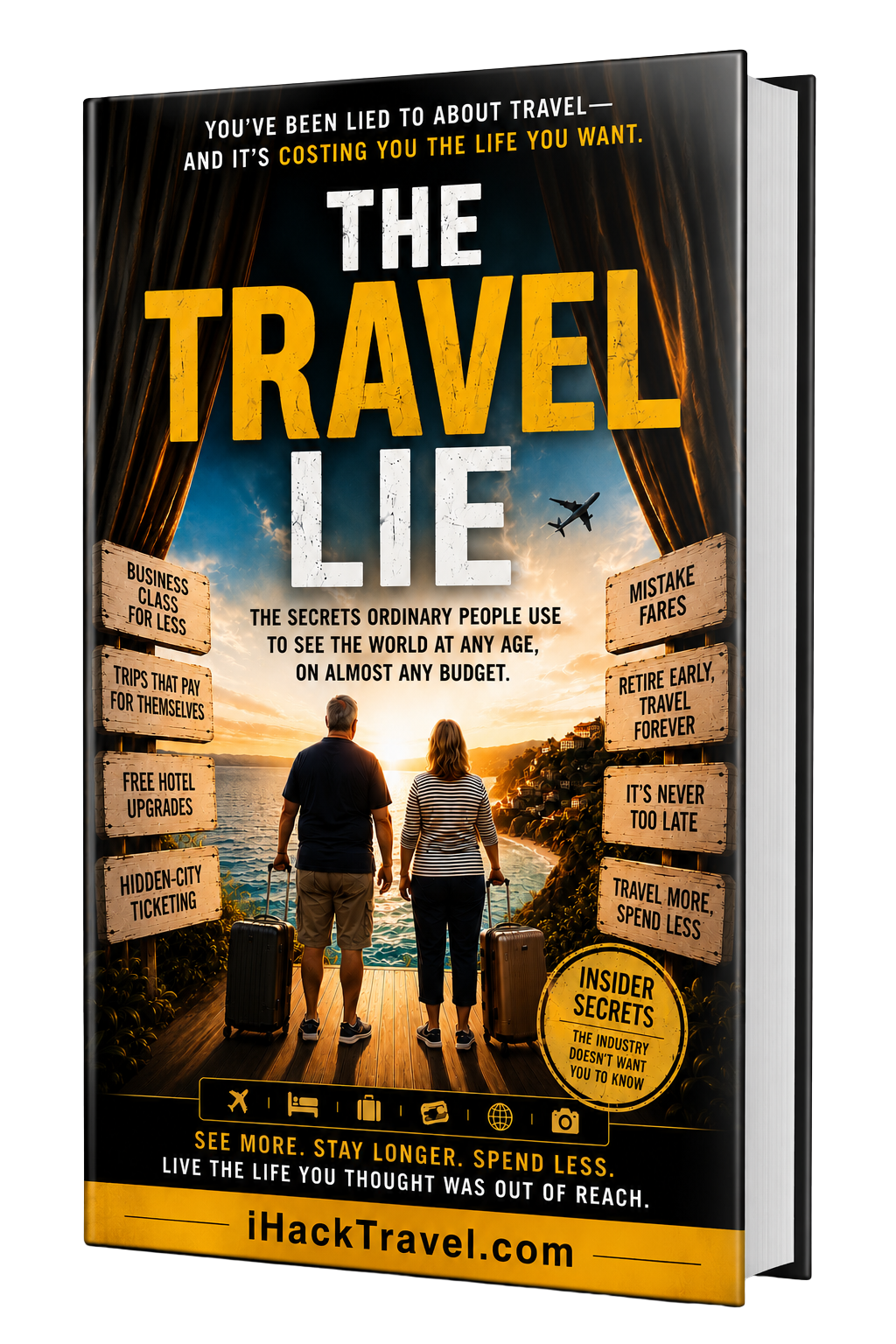
The Travel Lie
The book is about staying longer and spending less. Getting the cover right is the unglamorous part of that.
The Travel Maths — the whole thing in one place
The money side of travel in one place — what a trip actually costs, and where your money is worth more than it is at home.
Everything from this article — plus seven more travel systems
The hotel email scripts, the upgrade checklist, the loyalty settings, the flight search method and the money moves we use every single trip. Opens straight away.
Get the free Playbook →