
- First-hand where we say so — we name the places we’ve actually stayed
- No invented prices, no made-up restaurants, no AI filler
- Written to stay true — methods, not details that rot
- Interactive tools so you can test any of it yourself
The standard shape of a trip is five cities in ten days, and almost everyone who has done it recognizes the feeling on the way home: a blur of stations and check-ins, a camera roll full of places you cannot quite place, and the odd sense of having been extremely busy without having actually rested. The alternative is not a compromise or a smaller version of that trip. It is a different thing entirely, and it is usually cheaper.
What the fast trip actually costs you
Every move between cities has a fixed price that nobody counts properly. A departure day is not a day. You check out in the morning, you spend the middle of the day in transit, you arrive tired, you find the new place, you work out where to eat, and by the time you have your bearings it is dark.
Then there is the arrival premium. In your first two days somewhere you overpay for nearly everything, because you do not yet know which restaurant is the tourist one, which route is the sensible one, or what things ought to cost. Move every two days and you spend the entire trip paying the arrival premium and never once collecting the local's price.
What you actually get by staying
The specific thing that changes when you stay somewhere is that you stop consuming a place and start living in it. That sounds like a slogan until it happens to you, and then it is very concrete.
- You get a routine, and the routine is the point. A coffee place where they know your order. A market you go back to. A walk you do in the evening. These are the things people describe when they talk about a trip years later, and they cannot form in forty-eight hours.
- You meet people properly. Passing strangers in a hotel corridor is not meeting anyone. Being somewhere long enough to see the same faces is how travel friendships actually happen.
- You see the ordinary version of the place. Not the highlights — the Tuesday. What people eat on a normal weekday, what the neighborhood does at seven in the morning, what it is like when it rains.
- You stop optimizing. On a short trip every hour is allocated, because wasting one feels expensive. On a long stay you can spend an afternoon doing nothing without guilt, which is the thing most people actually needed from a holiday and rarely get.
The maths that surprises people
Here is the part that changes the decision even for people who are unmoved by the philosophy. Slow travel is usually cheaper in total, not merely cheaper per day.
| Cost | Fast trip | Slow trip |
|---|---|---|
| Flights | Multiple internal legs, each with transfers at both ends | One in, one out |
| Accommodation | Nightly rates, five separate bookings | One monthly rate, often steeply discounted |
| Food | Every meal eaten out, mostly near the sights | A kitchen, and you know where the market is by week two |
| Transfers | Airport runs, taxis with luggage, five sets | Two |
| The arrival premium | Paid five times | Paid once |
The single largest factor is the accommodation. Monthly rates are frequently far below thirty times the nightly rate, because a long guest removes turnover cost and guarantees occupancy. That one lever often makes a month cost less than a fortnight.
The monthly rate nobody asks for
Long-stay discounts are openly available and almost never requested. Here is exactly how and who to ask.
What changes at week two
There is a fairly reliable arc to a long stay, and knowing it in advance helps, because the middle of it feels like a mistake.
Week one feels like a holiday. Everything is new, you are still in tourist mode, and you are still overpaying. Week two is the strange one — the novelty has worn off, you have seen the obvious things, and a lot of people conclude at this point that they should have moved on. Week three is when it turns, and the place stops being somewhere you are visiting and starts being somewhere you live. That is the payoff, and it sits just past the point where most people would have left.
The honest objections
There are real arguments against, and pretending otherwise would be silly.
- “I'll see less.” You will see fewer countries and considerably more of one. Whether that is a loss depends entirely on what you wanted, and it is worth being honest with yourself rather than defaulting.
- “I only have two weeks of leave.” Then this is not for you this year, and that is fine — but two weeks in one place still beats two weeks in five places, and costs less.
- “I'll get bored.” Some people do. The ones who do tend to be the ones who chose a small place with one attraction. Choose somewhere with depth — a real city, or a base with day trips around it.
- “I'd have to work.” Frequently true, and frequently the point. A month somewhere while working normal hours is a completely different proposition from a month off, and it is how most long stays actually happen.
How to try it without committing to anything
Pick one place you were going to visit anyway and stay for the whole trip instead of using it as a first stop. Book accommodation with a kitchen and laundry. Do not plan the middle of it. Give yourself one thing to do most days and nothing at all on the others.
Then notice what you actually did with the unstructured time, because that is the real experiment. Some people find it the best trip they have taken. Some find they genuinely prefer moving. Both are useful answers and both cost the same to obtain.
The bottom line
One month in one place is usually cheaper than two weeks across five, because flights, transfers, nightly rates and the arrival premium all multiply with movement while the good parts of travel do not. It also produces the kind of trip people remember — routines, faces, an ordinary Tuesday somewhere that is not home.
If you try it, give it three weeks. The version most people abandon is the one that stops on day fourteen, right before the part that makes the whole argument.
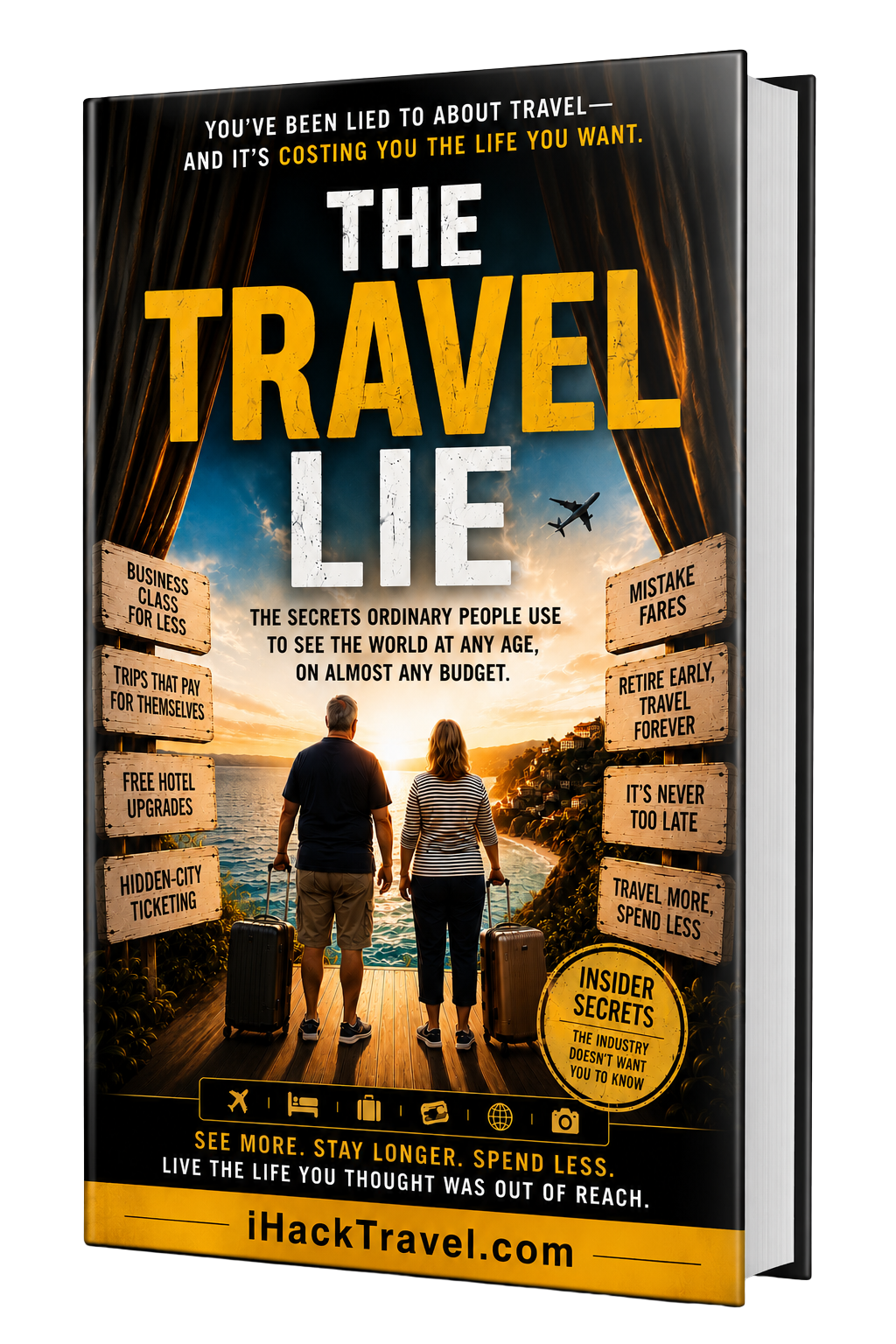
The Travel Lie
The book is built on the idea that the assumptions you inherited about travel are the expensive part. Moving fast is one of them.
The Travel Maths — the whole thing in one place
The money side of travel in one place — what a trip actually costs, and where your money is worth more than it is at home.
What would this actually cost you?
Enter your own city and monthly spend. The calculator returns the multiple, the annual surplus, and how long your money would last.
Open the cost calculator →