- First-hand where we say so — we name the places we’ve actually stayed
- No invented prices, no made-up restaurants, no AI filler
- Written to stay true — methods, not details that rot
- Interactive tools so you can test any of it yourself
Every conversation about travel is a conversation about cost. What people almost never price is the other side of the ledger: what it costs to keep not going. That number doesn't appear on a statement, it accrues quietly, and by the time it's visible it's usually too late to spend it differently.
The arithmetic nobody runs
The standard framing is that travel is an expense and staying home is neutral. That's not accurate. Staying home has a price too — it's just paid in a currency that doesn't show up in a budget.
Consider what accumulates while the trip keeps getting postponed: the years in which you were physically capable of the walk, the trek, the dive. The window in which a parent could still travel with you. The period before a career or a mortgage or a caring responsibility made a month away structurally impossible. None of that is recoverable and none of it appears in a spreadsheet.
The three things people say, and what's underneath them
“I can't afford it”
Sometimes true. Frequently a bookkeeping problem rather than an income problem — money exists but is formless, leaking through unexamined subscriptions and habits, never assigned to anything. A travel fund with an automatic transfer converts “I can't afford it” into “I'm eleven months away from it”, which is a different sentence entirely.
And the destination matters enormously. The same trip budget that buys nine days in Western Europe buys a month in Southeast Asia or Latin America. “Can't afford to travel” is often “can't afford to travel to the specific expensive place I was picturing.”
“I don't have the time”
Sometimes true, particularly with young children or a demanding role. But the arithmetic of a shoulder-season trip, a long weekend extended by two days, or working remotely from somewhere else for a fortnight makes more possible than most people assume. The barrier is frequently permission rather than time — asking for it, or giving it to yourself.
“Later, when things settle down”
This is the expensive one. Things don't settle down. The period after the current busy phase is followed by a different busy phase. Waiting for a clear window is waiting for something that arrives rarely and briefly, and usually later than the point at which the trip would have been easiest.
What it actually costs to keep waiting
| What you postpone | What it costs |
|---|---|
| The physically demanding trip | A finite window. The trek, the dive, the climb has an age at which it stops being available. |
| Traveling with parents | A window that closes without warning and does not reopen. |
| The long trip | Gets structurally harder with each added commitment — mortgage, career stage, dependants. |
| The trip with a specific person | Friendships and relationships change. The version of that trip with those people has an expiry. |
| The trip to a specific place | Places change. Some become inaccessible, some unrecognizable, some priced out. |
What this article is not saying
It isn't saying go into debt for a holiday. It isn't saying abandon responsibilities. Financial pressure is real and some circumstances genuinely don't allow it right now.
It's saying that “not now” should be a decision made with both columns visible — and most people only ever look at one. If you run the numbers on both sides and still conclude not now, that's a real answer arrived at honestly. If you've never run the second column at all, the decision was made by default rather than by choice.
The smallest version that counts
This doesn't have to mean a year abroad. It can mean four days somewhere you've never been, in the shoulder season, booked with a fare alert, staying somewhere modest. The gap between never going and going once is far larger than the gap between going once and going often.
What it would actually cost
The cost calculator shows what a month somewhere else costs against what your life costs now. The gap surprises most people.
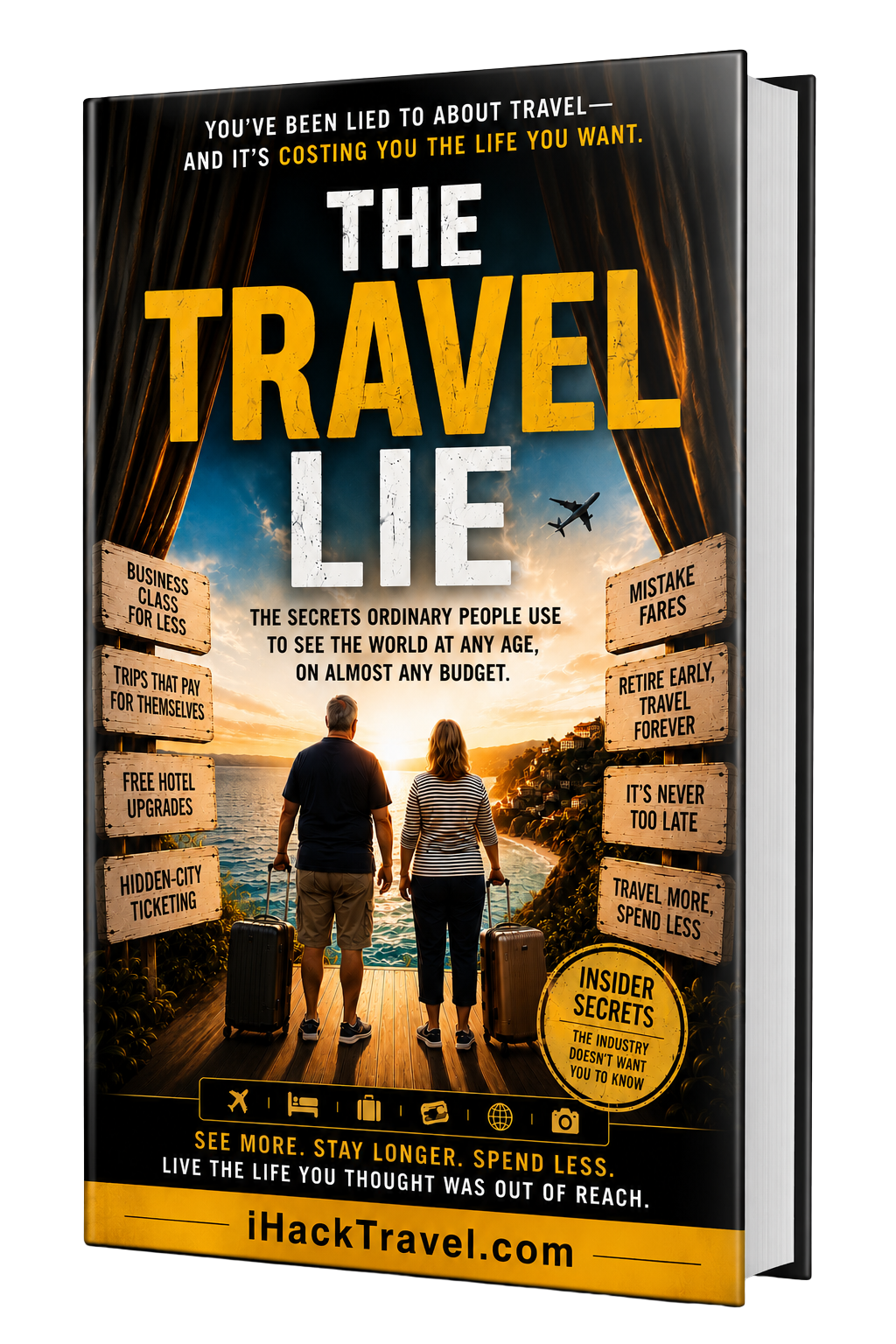
The Travel Lie
The book opens on the idea that the most expensive thing you own is a belief. This article is that argument in miniature.
The Travel Maths — the whole thing in one place
The money side of travel in one place — what a trip actually costs, and where your money is worth more than it is at home.
What would this actually cost you?
Enter your own city and monthly spend. The calculator returns the multiple, the annual surplus, and how long your money would last.
Open the cost calculator →
